

Cart
0
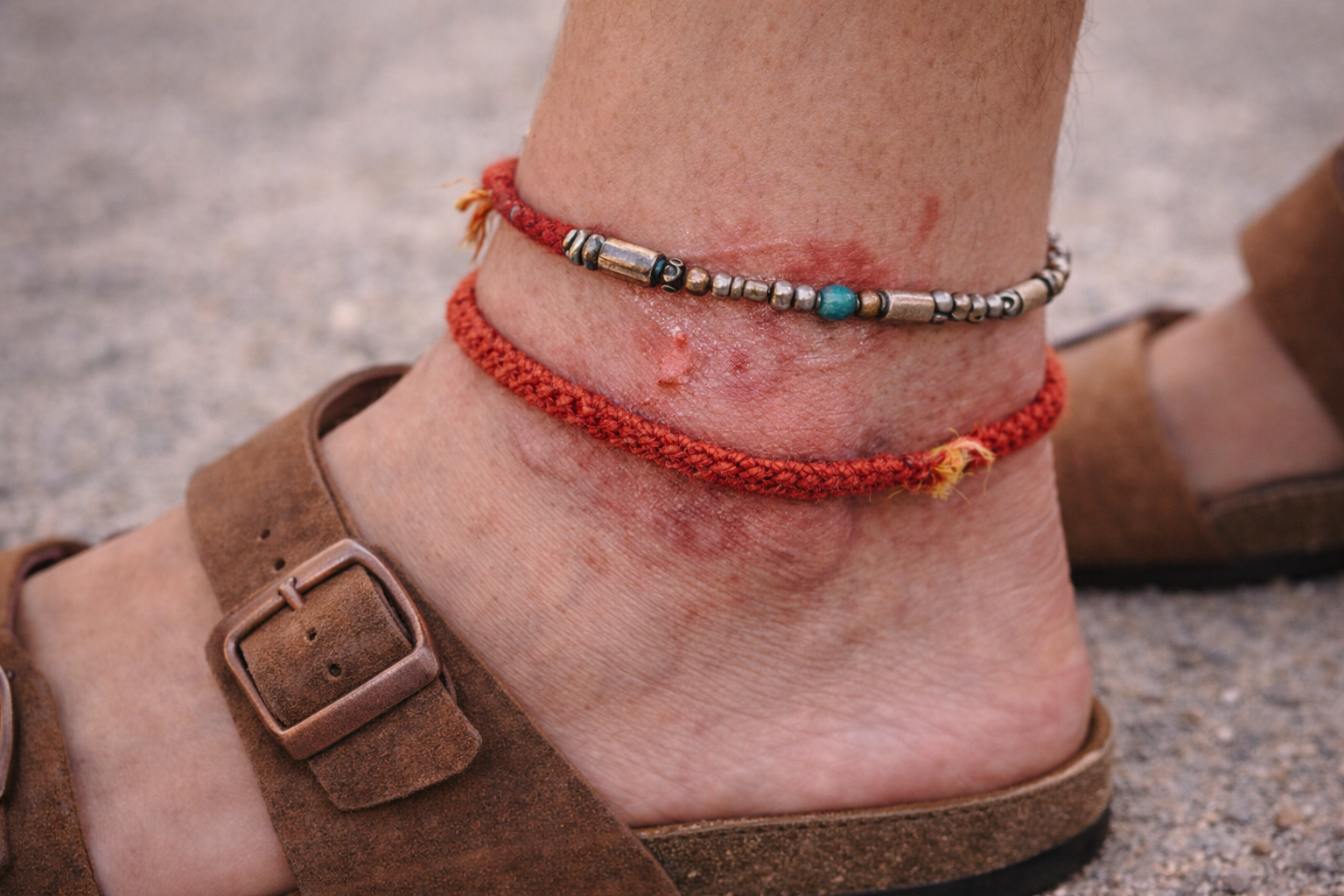
Ankle Bracelet and Sensitive Skin: A Choice Not to Be Overlooked
If you have sensitive skin, choosing an ankle bracelet should never be done by chance. Worn on an area subject to friction, perspiration, and sometimes humidity, this piece of jewelry can quickly cause irritation or skin reactions if it's not suitable.
Redness, itching, burning sensations, or prolonged discomfort are often linked to the material of the bracelet rather than the jewelry itself. Identifying which materials to avoid is therefore essential to wearing a bracelet comfortably, even for extended periods.
This issue relates to the questions addressed in How to care for an ankle bracelet? Simple tips to keep it looking new , where maintenance and material choices directly influence wearing comfort.

Why the ankle is a sensitive area
The ankle is a particularly exposed area: it moves constantly, rubs against clothes, shoes, or tights, and perspires easily.
An unsuitable material can therefore:
- create excessive friction
- retain moisture
- cause allergic reactions
- exacerbate existing irritations
In the following sections, we will see which materials to avoid, which to favor, and how to wear an ankle bracelet without discomfort, even with sensitive skin.
Sensitive Skin: Which Ankle Bracelet Materials to Avoid?
When you have sensitive skin, some materials used in ankle bracelets can cause unpleasant, even painful, reactions. These reactions are often linked to the composition of the jewelry, but also to its finish.
Metals containing nickel
Nickel is one of the most common causes of skin allergies. It is sometimes present in low-quality metal alloys.
On the ankle, prolonged contact with a metal containing nickel can lead to:
- persistent redness
- itching
- small bumps or patches
If you are prone to allergies, it is best to avoid bracelets whose composition is not clearly indicated.
Poor quality plated metals
Plated bracelets can seem attractive, but when the plating is thin or of poor quality, it wears off quickly. The underlying metal then comes into contact with the skin.
This greatly increases the risk of irritation, especially with perspiration or repeated friction.
This phenomenon is even more frequent when the bracelet is worn regularly, as explained in Summer ankle bracelet vs. everyday ankle bracelet .
Irritating synthetic textiles
Some woven ankle bracelets use synthetic fibers that are not very breathable. These materials can trap heat and moisture against the skin.
Result:
- burning sensations
- friction irritation
- prolonged discomfort
These reactions are more common in people with sensitive skin or with prolonged wear.
Bracelets that are too rough or poorly finished
Beyond the material, the finish of the bracelet plays an essential role. Poorly polished edges, rough clasps, or uneven links can irritate the skin.
Sensitive Skin: Which Materials to Favor for an Ankle Bracelet?
Having sensitive skin does not mean giving up wearing an ankle bracelet. You just need to favor materials known for their skin tolerance and stability over time.
Stainless steel: the safest choice
Stainless steel is one of the most recommended materials for sensitive skin. It is generally free of releasable nickel and is highly resistant to humidity, perspiration, and friction.
Its main advantages:
- hypoallergenic in most cases
- does not oxidize
- ideal for daily wear
- easy maintenance

It is the preferred material for people prone to irritation, especially in the Stainless Steel Ankle Bracelets collections.
Fine and smooth ankle chains
Beyond the material, the shape of the bracelet greatly influences comfort. Fine chains with smooth links limit friction areas.
They are particularly suitable for prolonged wear, as explained in Ankle bracelet or ankle chain: what are the differences and how to choose? .
Well-crafted natural materials
Some people with sensitive skin tolerate natural materials very well, provided they are well-finished and worn occasionally.
This can include:
- well-polished natural pearls
- smooth shells
- natural fiber cords
These bracelets are preferable for occasional wear, as detailed in Pearl ankle bracelet: how to wear it? and Shell ankle bracelet: symbol and style .
Practical tips to avoid irritation
- avoid wearing a bracelet that is too tight
- remove the jewelry in case of excessive perspiration
- clean the bracelet regularly
- take breaks from wearing the jewelry
These good practices complement the advice given in How to care for an ankle bracelet? Simple tips to keep it looking new .
Sensitive Skin and Ankle Bracelets: When Should You Stop Wearing It?
Even when choosing an ankle bracelet suitable for sensitive skin, it's important to pay attention to the signals your skin sends. A slight reaction can quickly worsen if the jewelry continues to be worn without adjustment.
Signs of irritation to watch out for
Certain symptoms should alert you and prompt you to remove the bracelet immediately:
- persistent redness around the ankle
- itching or tingling
- burning or heating sensation
- appearance of small bumps or patches
If these signs appear, it is recommended to let the skin breathe for several days before considering wearing jewelry again.
Adapting bracelet wear in case of sensitivity
To continue wearing an ankle bracelet despite sensitive skin, a few simple adjustments can make a difference:
- reserve the bracelet for short outings
- avoid wearing it in hot weather
- alternate bracelets to limit friction
- favor occasional wear over daily wear
Conclusion: comfort and style can go hand in hand
Having sensitive skin doesn't prevent you from wearing an ankle bracelet with style. By avoiding irritating materials, favoring safe materials, and adopting good habits, it is entirely possible to combine aesthetics and comfort.
To limit the risk of irritation, opt for suitable models in Stainless Steel Ankle Bracelets or explore all available options in All Our Ankle Bracelets .
TO GO FURTHER
This article is part of our complete ankle bracelet buying guide. For the full overview, consult our ultimate ankle bracelet guide.
Also discover our 4 thematic guides: choosing · women's · men's · meaning.

