

Cart
0
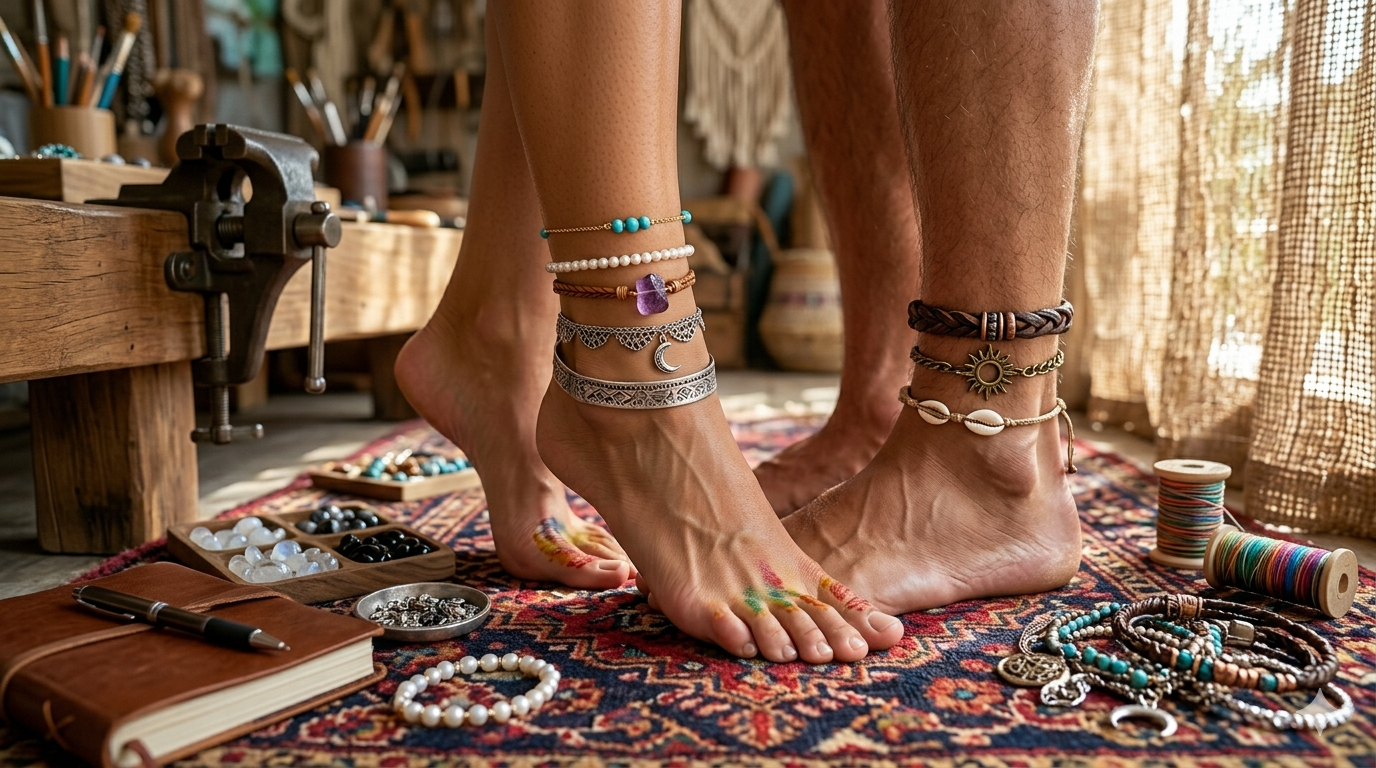
One anklet is pretty. Two or three stacked on the same ankle is a statement. Stacking — the technique of layering multiple ankle bracelets together — transforms a discreet accessory into a true fashion signature. But you still need to know how to do it without going overboard.
This guide teaches you how to combine materials, thicknesses, and styles to create a harmonious stack. Whether you have two anklets or five, you'll know exactly how to wear them together so it doesn't look like an accident.
Why anklet stacking works so well
Stacking isn't just an Instagram trend. It's a visual technique that has existed for centuries in Indian, African, and Mediterranean cultures, where the accumulation of ankle jewelry is an art in itself. What's different today is the approach: less quantity, more thought in the combinations.
Stacking works because it creates visual depth. A single bracelet is a line. Two bracelets are a dialogue. Three bracelets are a composition. The eye is naturally drawn to the superposition of textures, reflections, and movements. Each step makes the ensemble jingle and sparkle differently.
The difference between stacking and multi-strand
Be careful not to confuse them. A multi-strand bracelet is a single piece of jewelry designed with several chains linked together. Stacking, on the other hand, consists of wearing several independent bracelets one on top of the other. The freedom is total: you mix, remove, and add according to your mood of the day.
It's precisely this modularity that makes stacking addictive. Each new bracelet purchased opens up new possible combinations. A design that seemed too simple on its own comes alive when paired with two others. It's a stylistic building game — and once you start, you can't stop.
How many bracelets to stack?
The golden rule: between two and four bracelets maximum on the same ankle. Below two, it's not stacking. Beyond four, the risk of visual overload is real. The goal is not to cover the ankle but to create a harmonious ensemble that breathes.
For a first attempt, start with two. A thin chain as a base and a more textured design on top. Live with it for a week. If you feel something is missing, add a third. Stacking is built gradually, not all at once.
The meaning of anklets also evolves when you stack them. A single bracelet can be a simple accessory. Several together tell a story — each added design brings a layer of meaning or memory.
Technical rules for stacking: materials, thicknesses, and combinations
Successful stacking is based on three principles: varying textures, maintaining color consistency, and playing with thicknesses. Apply these three principles, and any combination will work. Ignore them, and the result will be messy, even with the most beautiful jewelry in the world.
Principle 1 — Vary textures without varying tones
The secret to harmonious stacking is contrasting textures within a single tone. A smooth silver anklet chain + a white pearl bracelet + a thin gray cord. Three radically different textures, but a single chromatic universe. The eye perceives richness without sensing clutter.
The classic mistake: mixing gold and silver. This can work for wrist jewelry, but on the ankle, where everything is concentrated in a few centimeters, mixing metals creates an unpleasant visual noise. Stick to the same metal family. All gold or all silver. Pearls and woven items, however, are neutral — they go with both.
Principle 2 — The hierarchy of thicknesses
Think of your bracelets like an orchestra. You need a soloist, accompanists, and a background sound. In stacking: a dominant model (the thickest or most distinctive), one or two intermediate models, and an almost invisible thin base.
The order on the ankle also matters. Place the thinnest model at the top (calf side), the thickest at the bottom (foot side). Why? Because the gaze naturally descends, and this progression creates a harmonious widening sensation, like a visual crescendo. If you're unsure about thicknesses, our article on which chain thickness to choose will help you.
Principle 3 — Natural spacing
Don't stick your bracelets right next to each other. Leave about half a centimeter between each one. This space allows each piece of jewelry to move independently and creates a play of light between the layers. Bracelets that slide and brush against each other without getting stuck produce that discreet sound — that light jingle that is part of the charm of stacking.
To maintain spacing, play with sizes. If your base bracelet is 24 cm, choose the next one at 25 cm and the third at 26 cm. This one-centimeter difference creates natural layering that falls perfectly without intervention. Models with extension chains are ideal for this — they allow you to adjust each bracelet independently.

The 5 combinations that always work
The minimalist duo — A thin silver chain + a slightly thicker gold-plated sterling silver chain. Two lines, two reflections. This is the most discreet stack, perfect for the office or an urban look. It works with sandals as well as with rolled-up jeans.
The beach trio — A shell bracelet + a colorful woven one + a stainless steel chain. Three completely different textures that instantly evoke the beach and summer. Steel is water-resistant, the woven one dries quickly, and the shells complete the picture.
The bohemian duo — A woven bracelet with a pendant + a natural bead design. The mix of handmade and refined creates an authentic bohemian look. Perfect for a festival, a summer brunch, or a seaside stroll.
The elegant stack — A sterling silver chain + a design with a heart or initial pendant + a fine link chain. The ensemble exudes sophistication without arrogance. This is the perfect stack for a summer evening, a chic terrace, or a dinner on vacation.
The metal-pearl mix — A gold steel chain + a white pearl bracelet. The cold/warm, shiny/matte contrast creates an elegant visual tension. This is the most photogenic association — the one that looks best in a photo on a tanned foot placed on the sand.
Stacking mistakes to avoid and how to wear your stack daily
Stacking looks simple. But certain errors can turn a curated look into visual clutter. Knowing them before you start will save you frustrating trial and error.
The 5 mistakes that ruin a stack
Mistake 1: all the same thickness. Three identical chains stacked are flat and monotonous. Always vary the gauges. One thin, one medium, one thick. It's the contrast in thickness that creates volume and visual interest.
Mistake 2: too many pendants. One pendant in the stack is an accent. Two is a conflict. Pendants clash, get tangled, and create annoying metallic noise. Keep only one pendant per stack and compensate with varied textures on the other bracelets. To avoid knots, consult our anti-tangling solutions.
Mistake 3: ignoring body shape. A slender ankle can easily support three or four thin bracelets. A stronger ankle benefits from opting for two more distinct designs rather than four thin ones that seem to get lost. Adapt the number and thickness to your body shape — stacking should enhance, not clutter.
Mistake 4: mixing stylistic universes. A punk bracelet with heavy chains with a pink pearl design and a hippie woven one — it doesn't work. Each stack should have a stylistic direction. Bohemian, minimalist, chic, or beachy — choose a universe and stick to it.
Mistake 5: neglecting comfort. Stacking should be unnoticeable. If you feel the bracelets rubbing, pulling, or hindering your walk, reduce the number. Jewelry that irritates is jewelry that gets taken off. And a stack removed at noon was pointless.
Stacking and outfits: combinations that work
Stacking doesn't go with everything. With long pants and closed shoes, no one will see anything — wear a single bracelet on those days. Stacking shines when ankles are visible: sandals, bare feet, ankles exposed by rolled-up jeans or a midi dress.

In summer, stacking reigns supreme. Flowy dresses, shorts, long slit skirts — every outfit becomes a frame for your ankle composition. The summer anklet takes on a whole new dimension when it's not alone. Stacking gives that "I made an effort without looking like I did" effect that everyone envies.
Stack on one ankle or both?
The question often arises. The answer is almost always: only one ankle. Concentrated stacking on one side creates a powerful focal point. Spreading bracelets on both ankles dilutes the effect and creates a scattered look.
The exception: if you wear a minimalist solo design on one ankle and a stack of two or three designs on the other. This deliberate imbalance creates interesting asymmetry — provided both sides remain in the same chromatic universe. To know which ankle to wear your bracelet on, trust your instinct: the most visible ankle in your usual outfits is the right one.

Maintaining a stack: essential steps
The more bracelets you wear, the more they rub against each other. This friction can wear down the finishes of the most fragile designs. The solution: remove the entire stack each evening and store the bracelets separately. A small fabric pouch per design is sufficient. This five-second action extends the lifespan of each piece of jewelry by several months.
For cleaning, treat each bracelet according to its material. Stainless steel is cleaned with warm water and mild soap. Sterling silver requires a polishing cloth. Pearls, a simple wipe with clear water. Our anklet care guide covers each material in detail.
Building your stack gradually
The best advice for successful stacking: don't buy everything at once. Start with a piece you adore and wear it alone for a few weeks. Observe what's missing. If you feel a touch of texture would complete the look, add a woven bracelet. If it's light that's missing, opt for beads.
Over time, your collection grows naturally, and each addition makes sense. That's how you build a stack that tells a story—not by buying a pack of five matching bracelets all at once. Explore our complete collection to find the next link in your stack. And if you're looking for a guide on how to choose the perfect bracelet for your style, it's made for that.
TO GO FURTHER
This article is part of our complete guide to women's anklets. For the full overview, check out our ultimate guide to anklets.
Also discover our 4 thematic guides: choosing · women · men · meaning.

